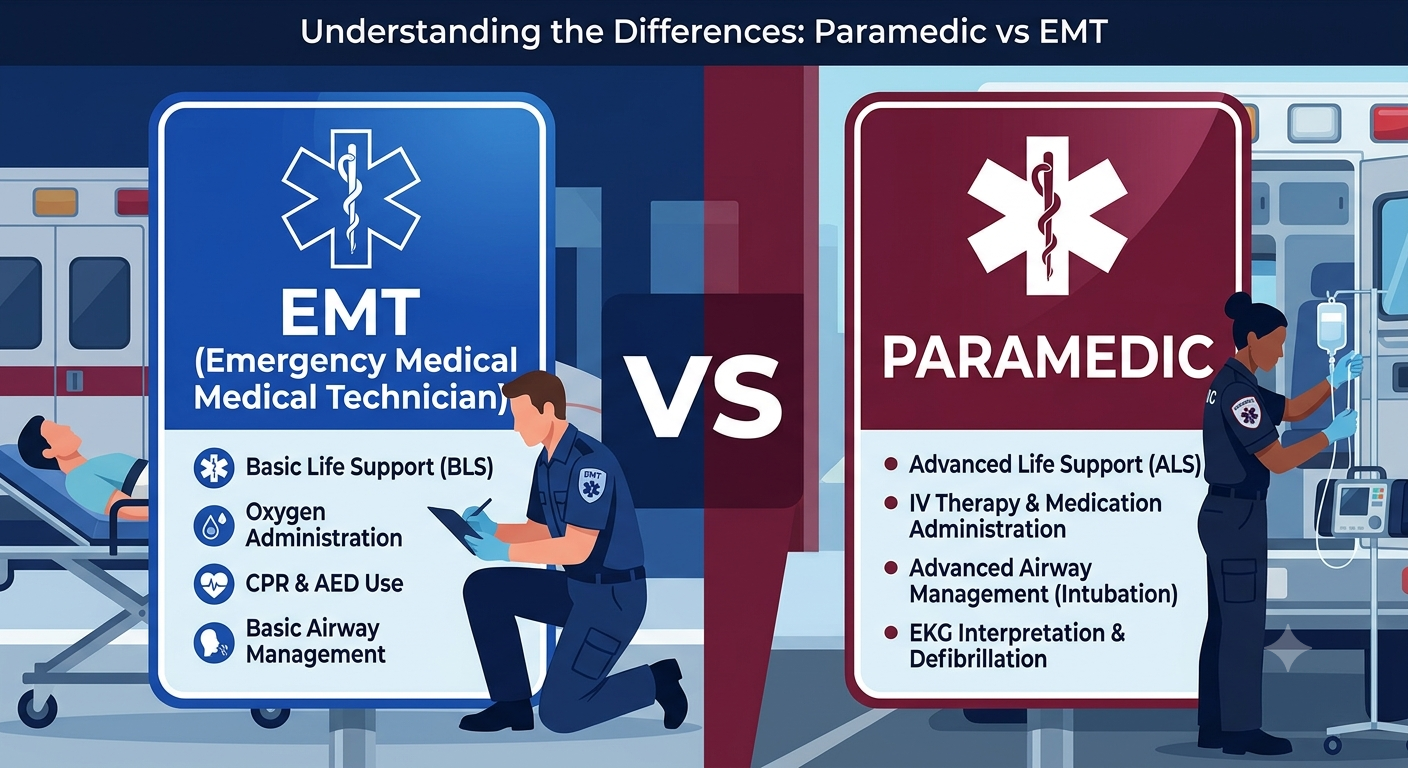
Most event organizers book catering, AV, and security months before they think about medical coverage. By the time it comes up, they're comparing providers who showed up in a Google search — without knowing what questions to ask. Here's a framework that changes that.
1. Verify Active Credentials, Not Just Certifications
An EMT certification means someone passed a test. An active EMT means someone is on an ambulance, in an emergency department, or on a fire truck — right now. That difference matters enormously at an event.
Skills degrade without practice. Medication protocols change. Equipment evolves. An EMT who certified several years ago and has been doing event work exclusively is not the same as one who ran a shift at a trauma center last week. Both carry the same card. Neither will tell you unless you ask.
The question to ask: "Are your staff currently working as first responders outside of event coverage?" A credible answer is specific — active with a fire department, currently licensed and running shifts, holding active hospital privileges. A vague response ("all our staff are certified") is a flag worth noting.
2. Ask About Their Equipment
Event medical coverage can mean anything from a fully stocked ALS response kit to two people with a pre-packaged first aid box. The difference isn't visible until something goes wrong — and by then it's too late to ask.
A properly equipped event medical team carries at minimum: an AED, supplemental oxygen with airway adjuncts, a BVM (bag valve mask), a trauma kit with tourniquet capability, IV access materials, and basic assessment tools. A rapid response team covering a large venue should add a stretcher or mobility equipment for patient movement.
Ask directly: "Can you walk me through what your standard kit includes for an event this size?" If the answer is vague, centered only on the first aid station appearance, or deflects toward certifications rather than equipment — push further. The people who respond well to that question are the ones worth hiring.
3. Confirm They Have a Pre-Event Planning Process
A provider who shows up day-of without prior coordination is a liability. Professional event medical teams don't wait until load-in to start planning. They ask questions before they agree to show up at all.
Before signing a contract, confirm that the provider will:
- Review your venue layout and propose medical station locations
- Identify the nearest hospital, trauma center, and EMS access points
- Discuss communication protocols with your operations team
- Confirm staffing levels based on your actual headcount — not a one-size-fits-all package
- Conduct or request a venue walkthrough for events above a certain size
Red flag: If a provider sends you a quote without asking about your venue, your attendance, or your event type — that's not a planning process. That's a transaction. A team that doesn't ask isn't ready to respond.
For a reference on how to think through event coverage needs before those conversations, the Event Medical Coverage Guide walks through the key variables by event size and type.
4. Check Their Insurance
This is non-negotiable and surprisingly often skipped. Any professional event medical provider should carry professional liability insurance (medical malpractice), general liability insurance, and workers' compensation for their staff.
Your venue will almost certainly require a certificate of insurance naming them as an additional insured. Get this documentation before the event — not the day of. Providers who can't produce it promptly, or who become evasive when asked, represent a real risk to your event permit and your own liability exposure.
Ask for documentation early in the conversation. A credible provider will have it ready without hesitation.
5. Understand the Staffing Model
There's a meaningful operational difference between a company that employs its own full-time team and one that brokers shifts to available contractors. The former builds cohesion — people who train together, work together, and respond together. The latter can be inconsistent from event to event.
Ask: "Are the people covering my event your employees or independently contracted?" Follow up by asking whether the same team members work together on a regular basis. For larger events, where communication between team members is critical and split-second decisions depend on familiarity with each other's instincts, this is not a minor detail.
6. Ask the Fire Watch Question
This one catches most event organizers completely off guard, and it comes up more often than you'd expect.
Depending on your venue's suppression system status, the use of temporary structures, local AHJ (Authority Having Jurisdiction) requirements, or occupancy conditions, your event may legally require a designated fire watch — separate from and in addition to medical coverage. Most event medical companies cannot provide fire watch. The credentials are different. Specifically, fire watch requires training in fire hazard identification, patrol documentation requirements, and familiarity with applicable codes including NFPA 101, the International Fire Code, and the NC State Building Code.
At Guardian, TC Caldwell is a Deputy Fire Marshal with the City of Raleigh — 13 years in that role. That credential makes code-compliant fire watch possible in the same engagement as event medical coverage. If you need both, you can get both from one team with one pre-event process.
The question to ask every provider: "If my venue requires a fire watch, can you provide it — or do I need to arrange that separately?" The answer tells you whether they understand the full scope of event safety, or just part of it. Learn more about when fire watch is required in the NC Fire Watch Requirements Guide.
Booking event medical coverage isn't a box to check. It's a decision that could matter enormously on one specific day. The providers worth hiring will welcome every question on this list. The ones that can't answer them clearly are telling you something — and you should listen.
Ready to talk through coverage for your event? Request a quote and we'll start with the right questions.