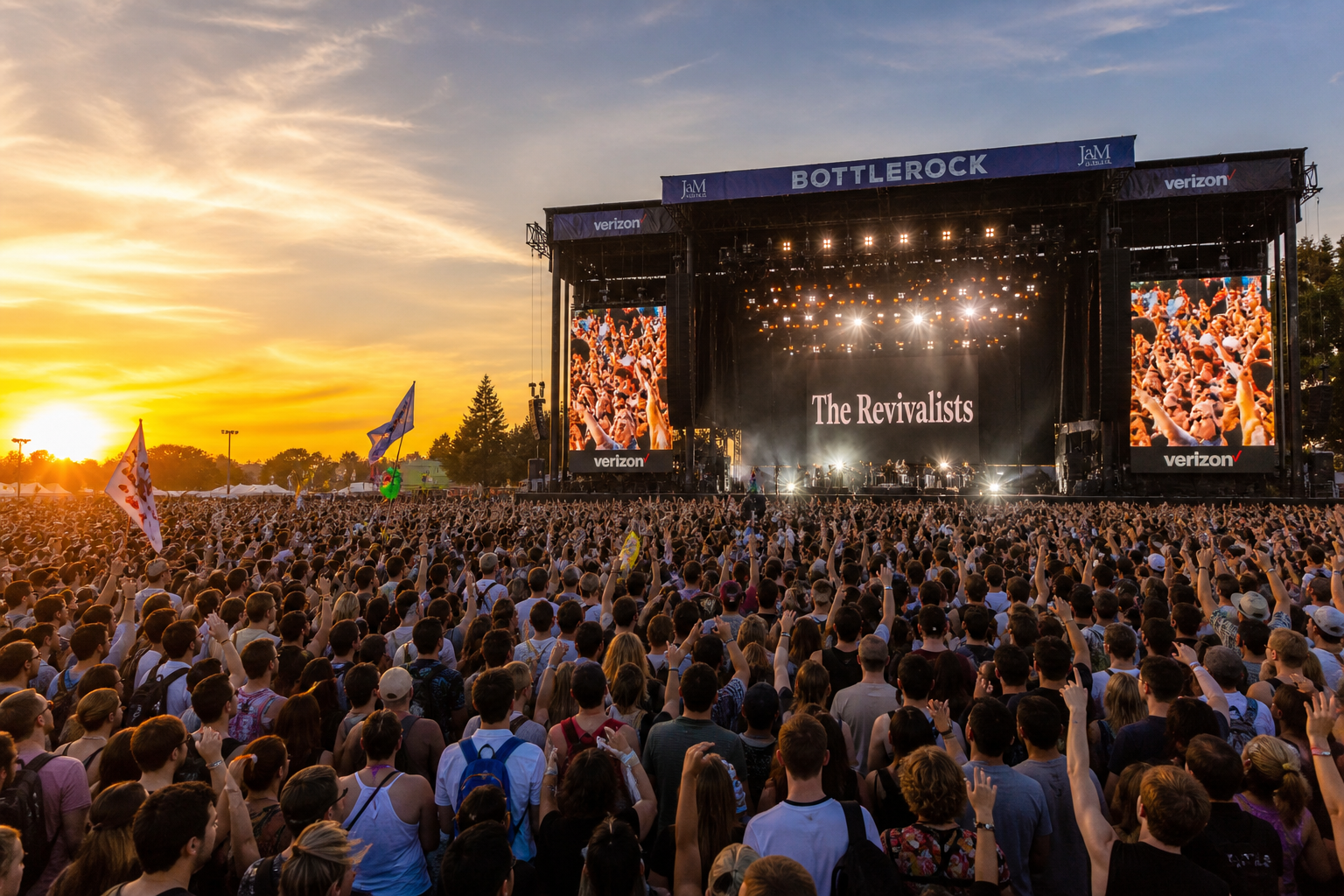
Most people walk into a festival, concert, or sporting event without giving safety a second thought. As a Deputy Fire Marshal and event medical professional, I spend every event thinking about almost nothing else. Here's what I want every event-goer to know.
The moment you arrive at any large event, take 60 seconds to locate the nearest first aid station or medical tent. They're usually marked with a red cross and positioned near main entrances, stages, or high-traffic areas. In an emergency, every second counts — and a crowd is not the time to start looking for help.
Heat exhaustion and heat stroke are among the most common medical emergencies at outdoor events — and they're almost entirely preventable. Drink water consistently throughout the event, not just when you feel thirsty. Thirst is already a sign of dehydration. If you're drinking alcohol, match every alcoholic drink with a glass of water.
Warning signs to watch for in yourself or others: dizziness, nausea, heavy sweating, pale or clammy skin, rapid heartbeat, or confusion. If you see any of these, find a shaded area and get to medical staff immediately.
Before you split up from your group, agree on a specific meeting spot that everyone can find without cell service. Phone batteries die, signals drop, and crowds get loud. A landmark — a specific gate, a large statue, a food truck — works better than "by the stage."
If you're attending alone, text someone your location when you arrive and check in periodically. It takes 30 seconds and could matter enormously if something goes wrong.
Crowd crushes and stampedes are rare, but they do happen — and they almost always start with a small, preventable chain reaction. If you feel the crowd beginning to compress or push in one direction, don't fight it. Move with the crowd diagonally toward the edge. Keep your arms in front of your chest to protect your lungs and maintain a small air pocket.
If someone near you falls, call out loudly to create awareness. People fall in crowds not because they're pushed, but because others can't see them. Your voice can be a lifesaver.
This might be the most important one. Time and again, people wait too long to seek medical help at events — out of embarrassment, uncertainty, or not wanting to "make a scene." If something feels wrong, find medical staff immediately. No experienced first responder is ever annoyed by a cautious call for help.
The same goes for helping others. If you see someone who looks unwell — pale, disoriented, struggling to stand — get help. You don't need to know what's wrong. That's our job. Yours is to get us there.
Events are meant to be enjoyed. The goal of every Guardian team member is to make sure you leave the same way you arrived — safe, healthy, and having had a great time. Stay aware, look out for the people around you, and don't hesitate to flag us down if you need anything.
Stay safe out there.